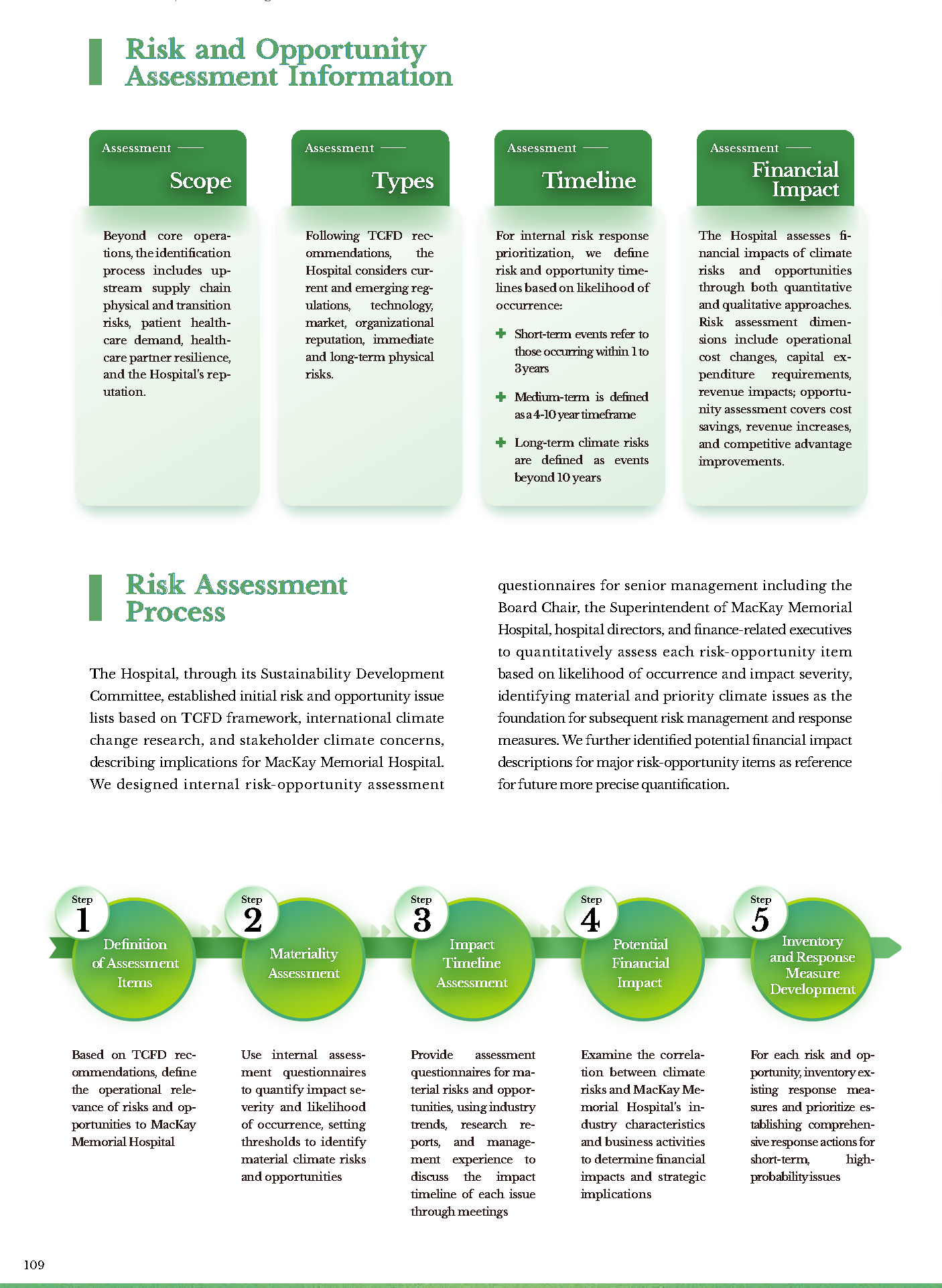
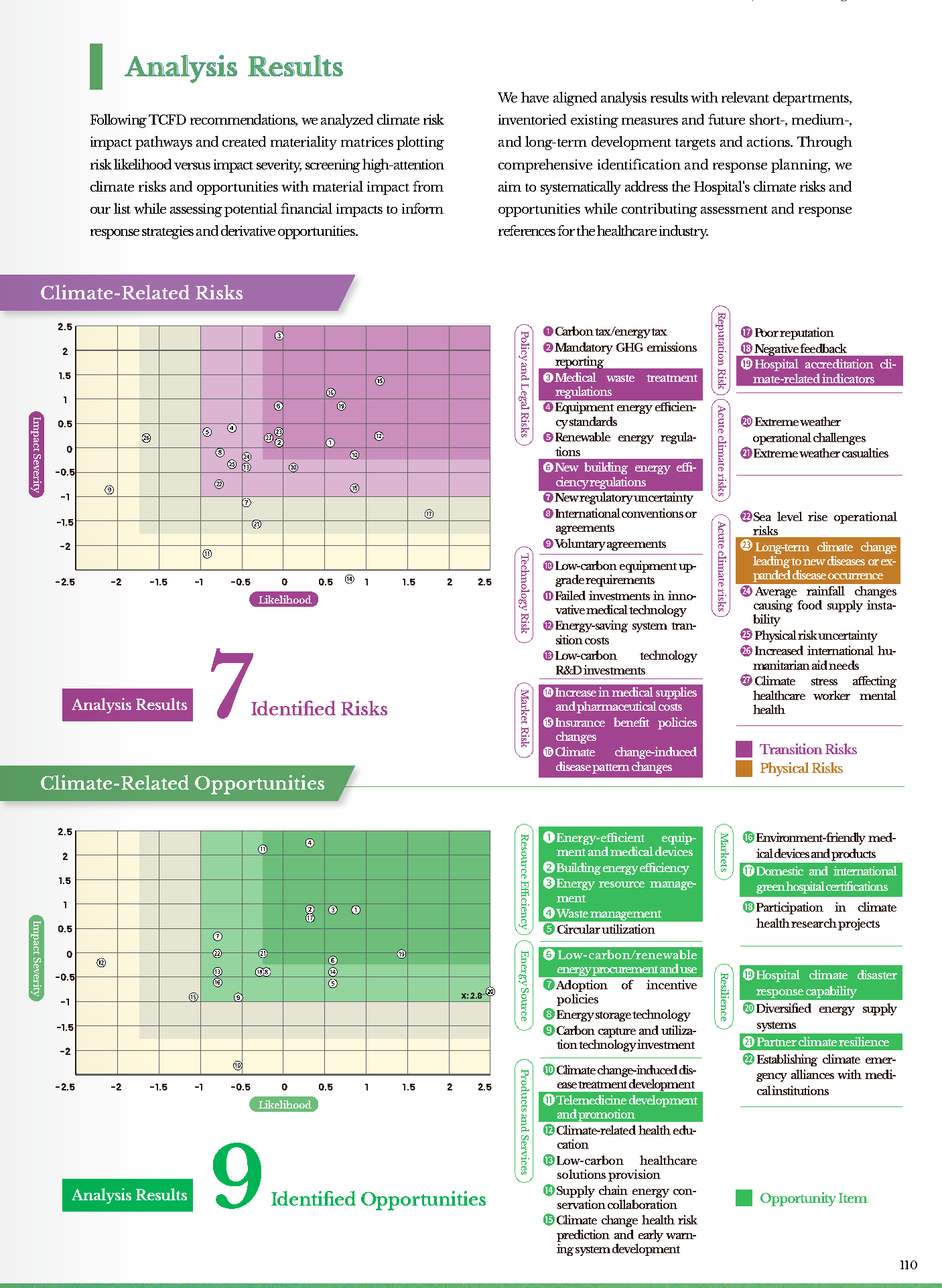
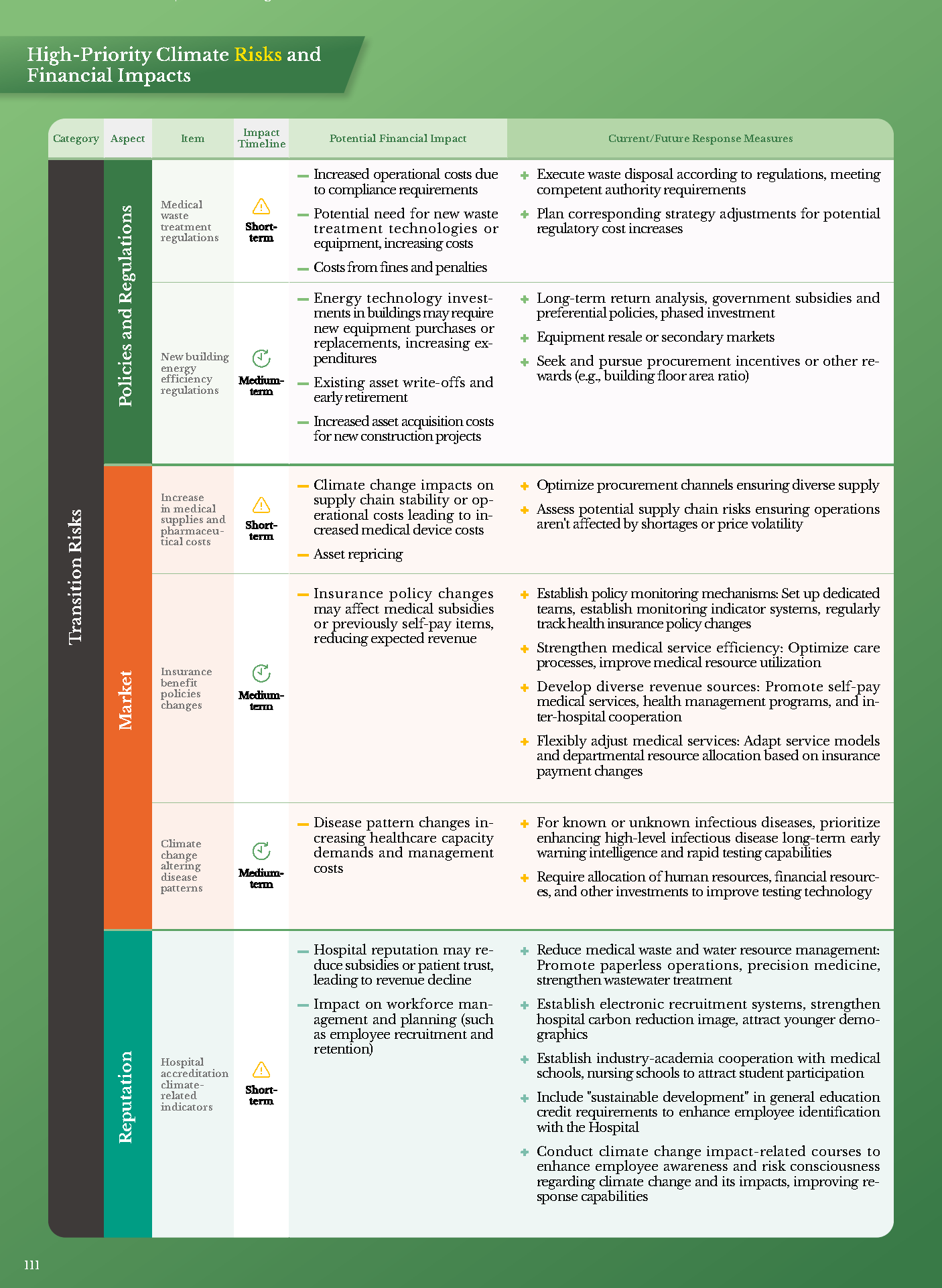
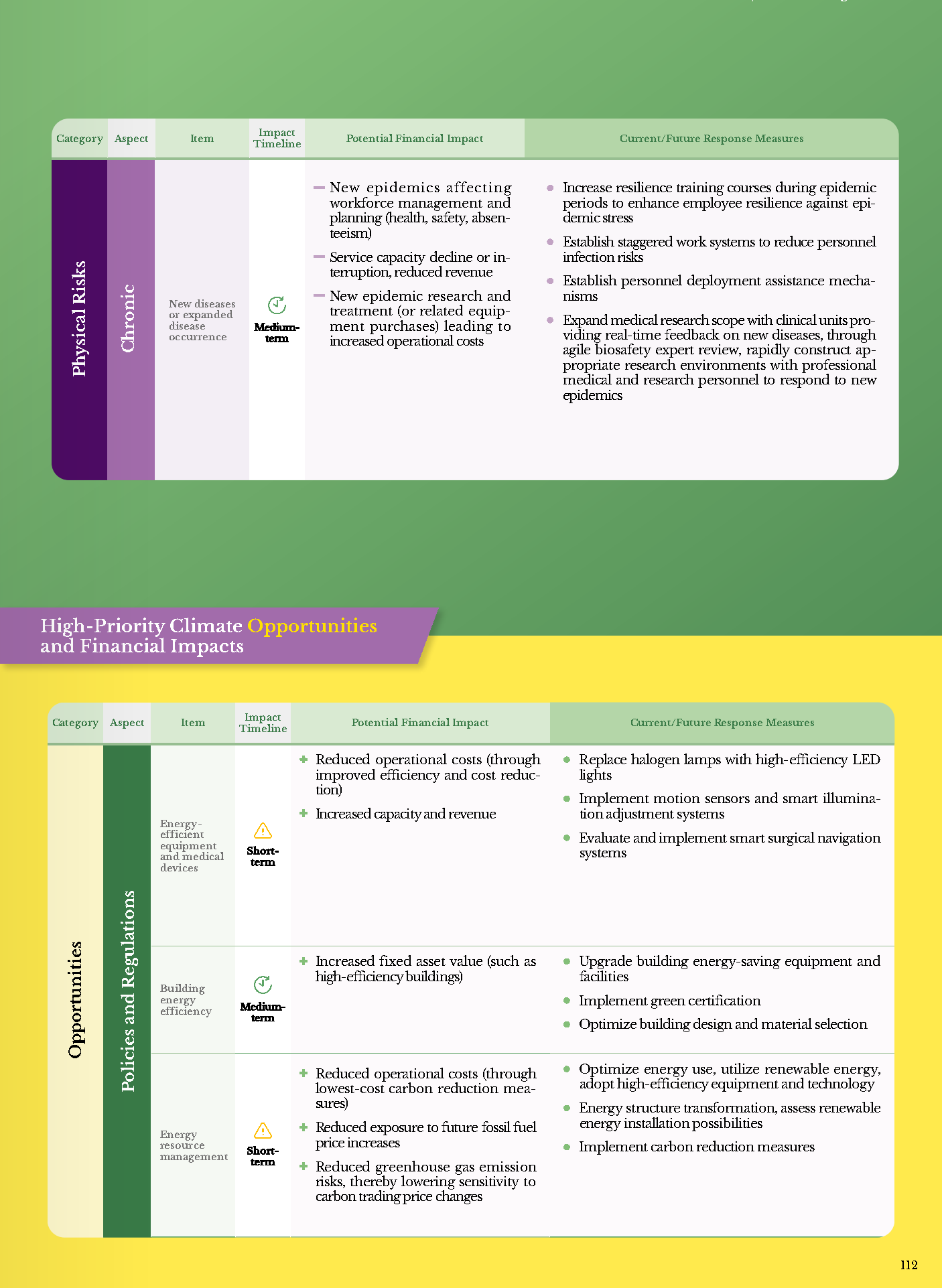
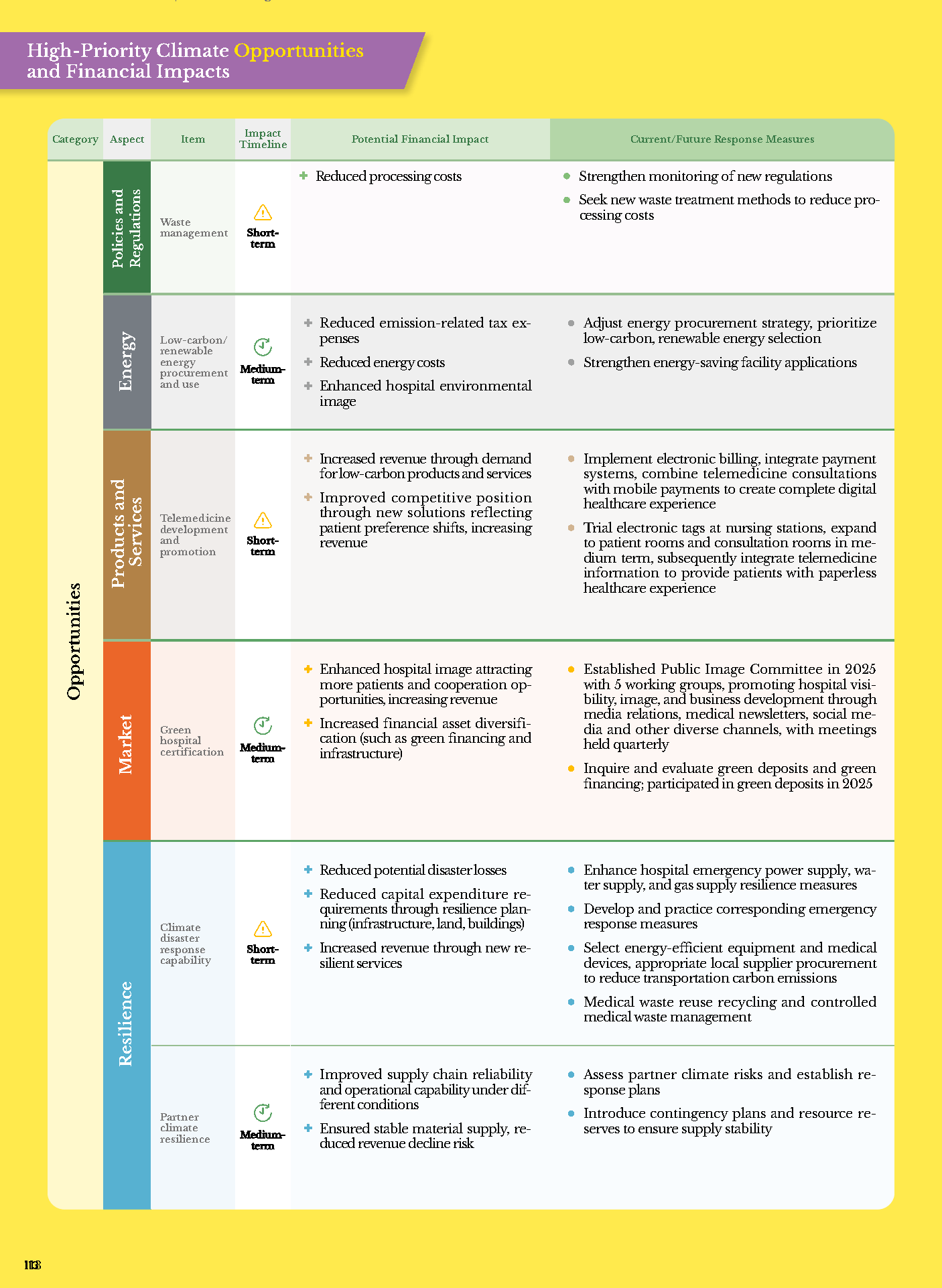
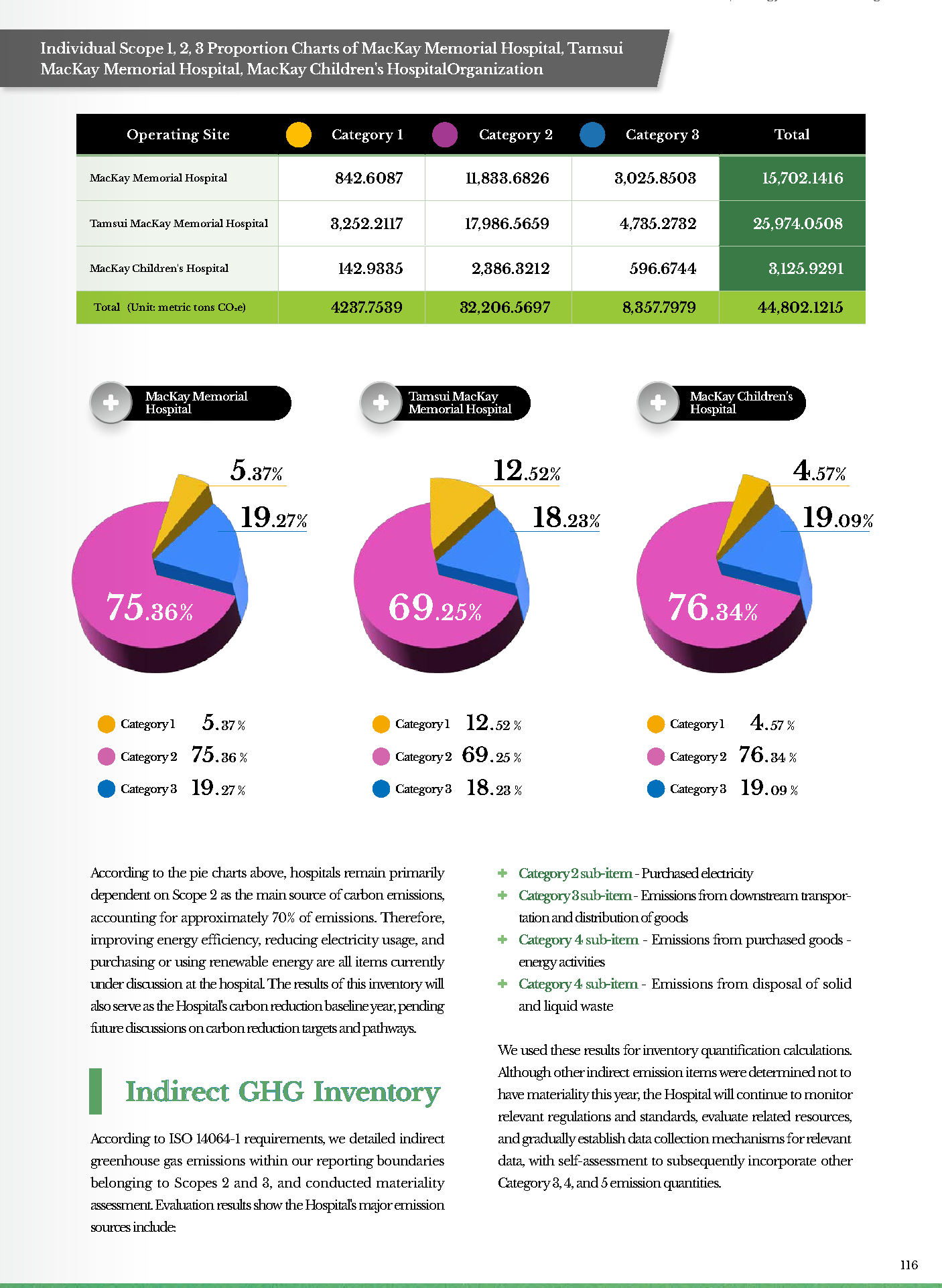
In response to global climate change challenges, hospitals bear significant responsibility as one of the high-carbon-emission industries. Through systematic climate governance working groups and cross-departmental collaboration, we have implemented comprehensive TCFD climate risk and opportunity identification, developed response strategies and preparedness measures, established greenhouse gas inventory mechanisms, completed Scope 1, Scope 2, and partial Scope 3 inventories with verification, and actively promoted energy efficiency improvements, renewable energy integration, and innovative medical waste recycling initiatives. These efforts demonstrate our leadership in green transformation and our commitment to protecting both human health and environmental sustainability for the future.
Key Figures
Total GHG emissions in 2024
44,802.1178metric tons CO2e
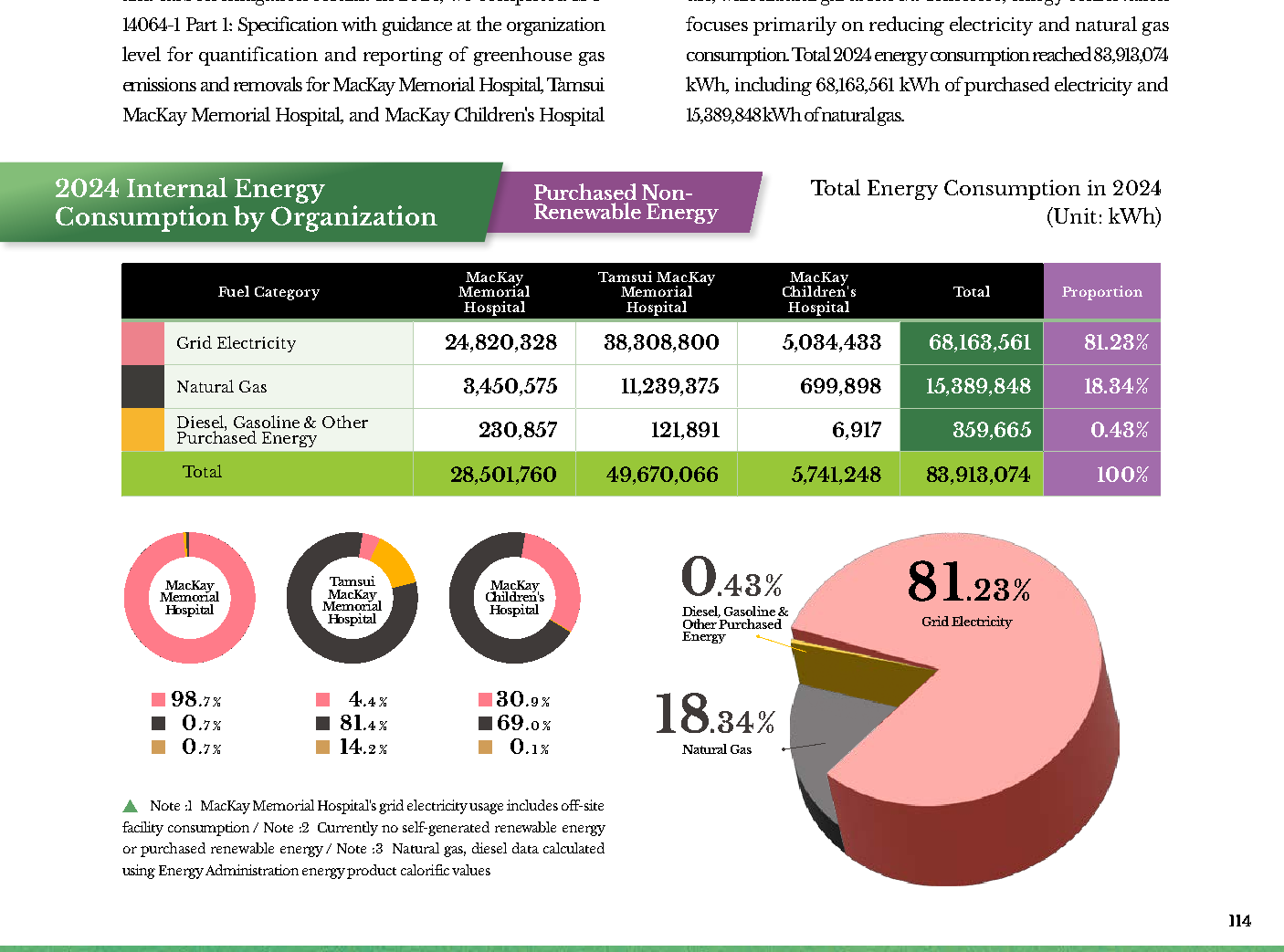
Total energy consumption in 2024
83,913,074kWh
Total waste amount
3,858.235metric tons
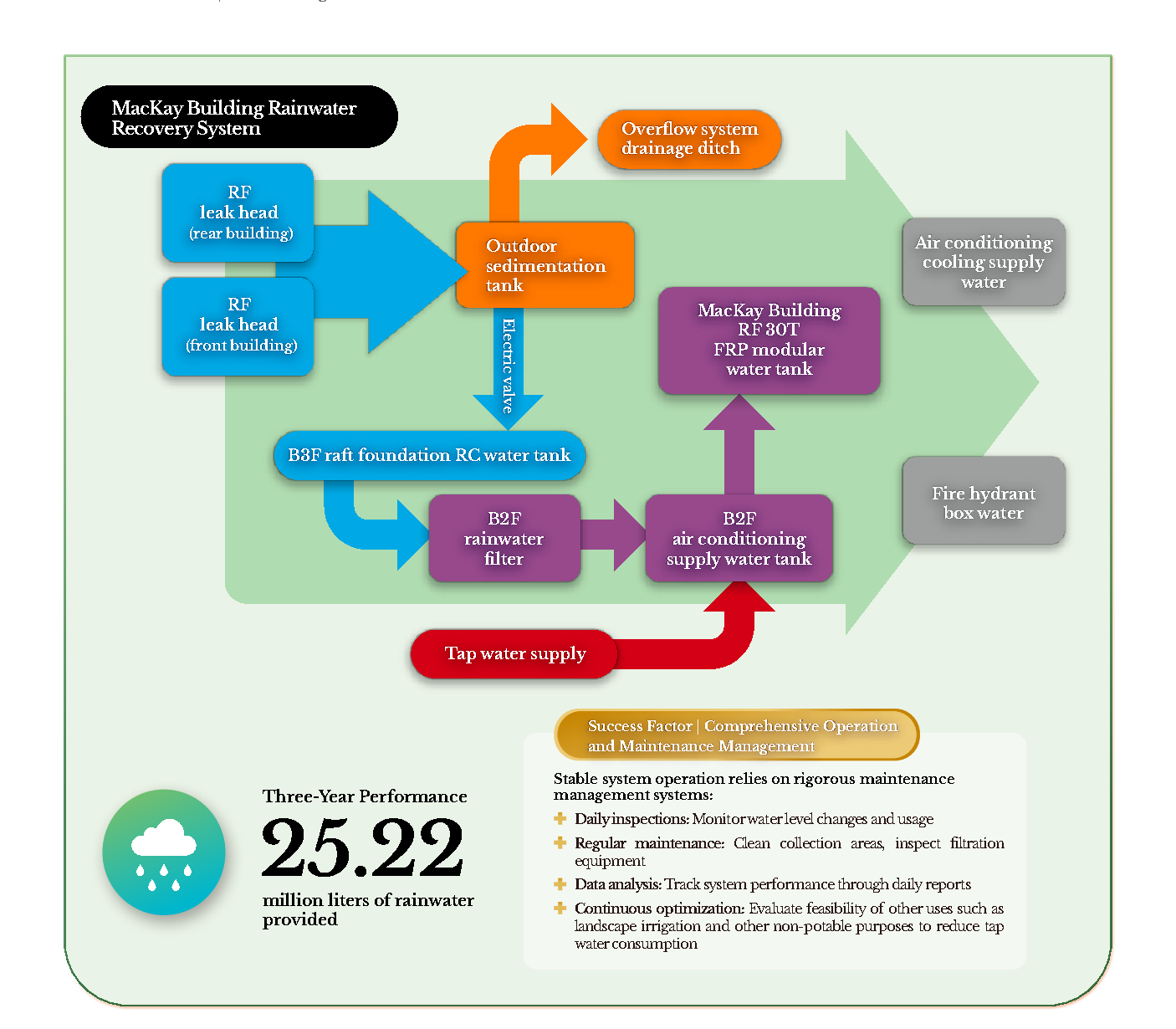
Rainwater recovery system cumulative collection
25.22million liters
Love for the Earth
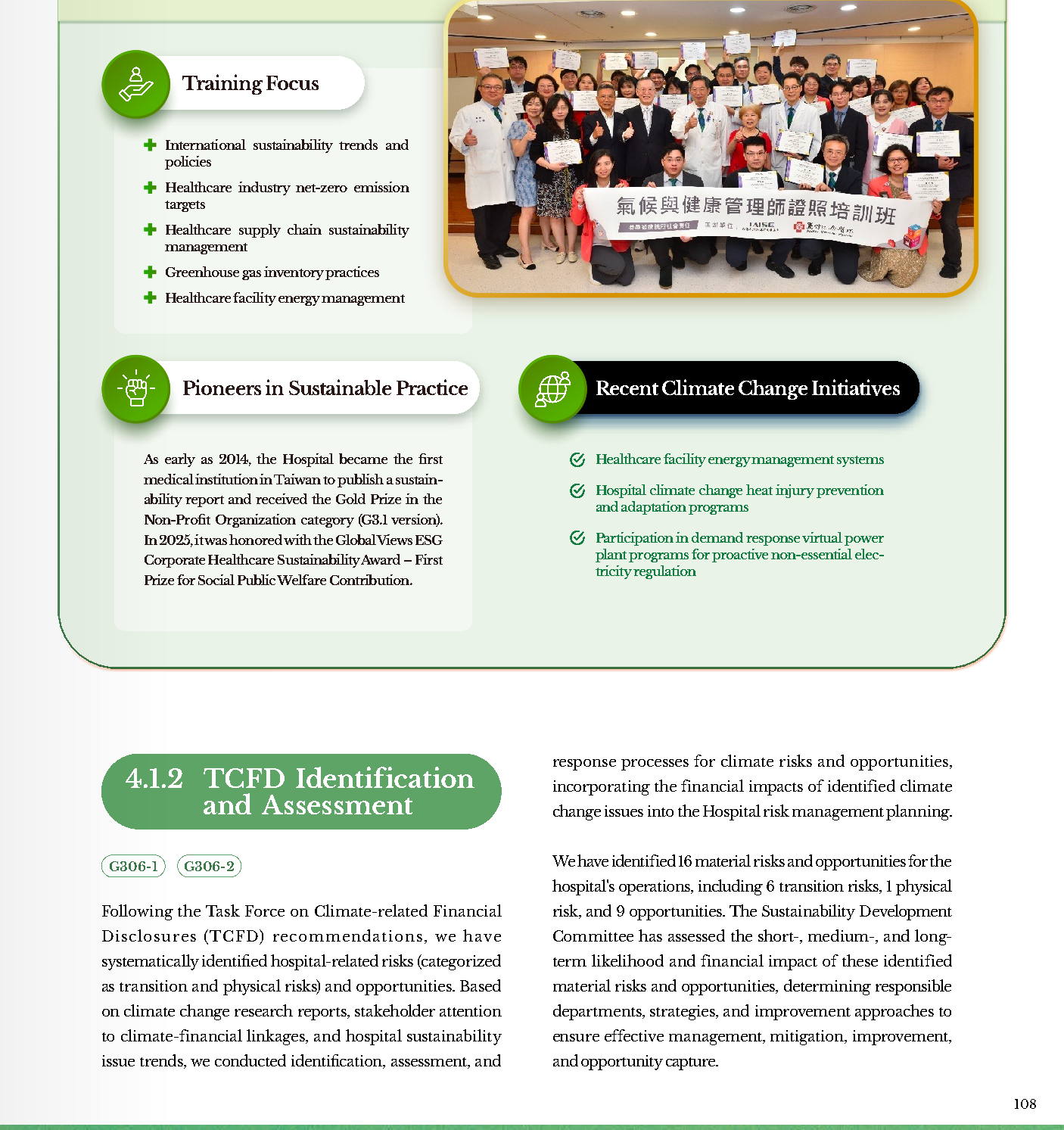
All 30 Supervisors Completed the First Cohort of “Climate and Health Manager” Certification
As global climate change challenges intensify, MacKay Memorial Hospital has positioned sustainability at its core, actively promoting green transformation in the healthcare industry and establishing a new paradigm for integrating healthcare with ESG principles. To cultivate sustainability professionals, we invited 30 senior managers from various departments—including physicians, nurses, medical technicians, and administrative staff up to vice superintendent level—to form the first cohort of MacKay Memorial Hospital “Climate and Health Manager” seed participants, connecting medical knowledge with sustainability practices through specialized training.
Energy Resource Management
4.2.1 Energy Management Policy and Objectives
The Energy Management Working Group and Green Promotion Working Group are responsible for promoting various energy and resource management measures at the Hospital, including carbon reduction strategies, medical equipment recycling, and waste reuse. These groups convene regularly to review energy efficiency, plan energy-saving improvement programs, report to the Sustainability Development Committee quarterly, and track achievement of energy-saving targets.
In recent years, following the Ministry of Economic Affairs Energy Administration's energy conservation programs, we have implemented related energy-saving and electricity conservation environmental policies, continuously evaluating replacement of aging energy-intensive equipment, and selecting short-term implementable solutions to achieve concrete energy reduction and carbon mitigation results.
4.2.2 Current Energy Usage and Efficiency Improvements
The Hospital's 2024 energy consumption calculation covers MacKay Memorial Hospital, MacKay Children's Hospital, and Tamsui MacKay Memorial Hospital facilities. Statistics show electricity as our primary energy source at 81.23% of total energy use, with natural gas at 18.34%. Total 2024 energy consumption reached 83,913,074 kWh.
4.2.3 Greenhouse Gas Management
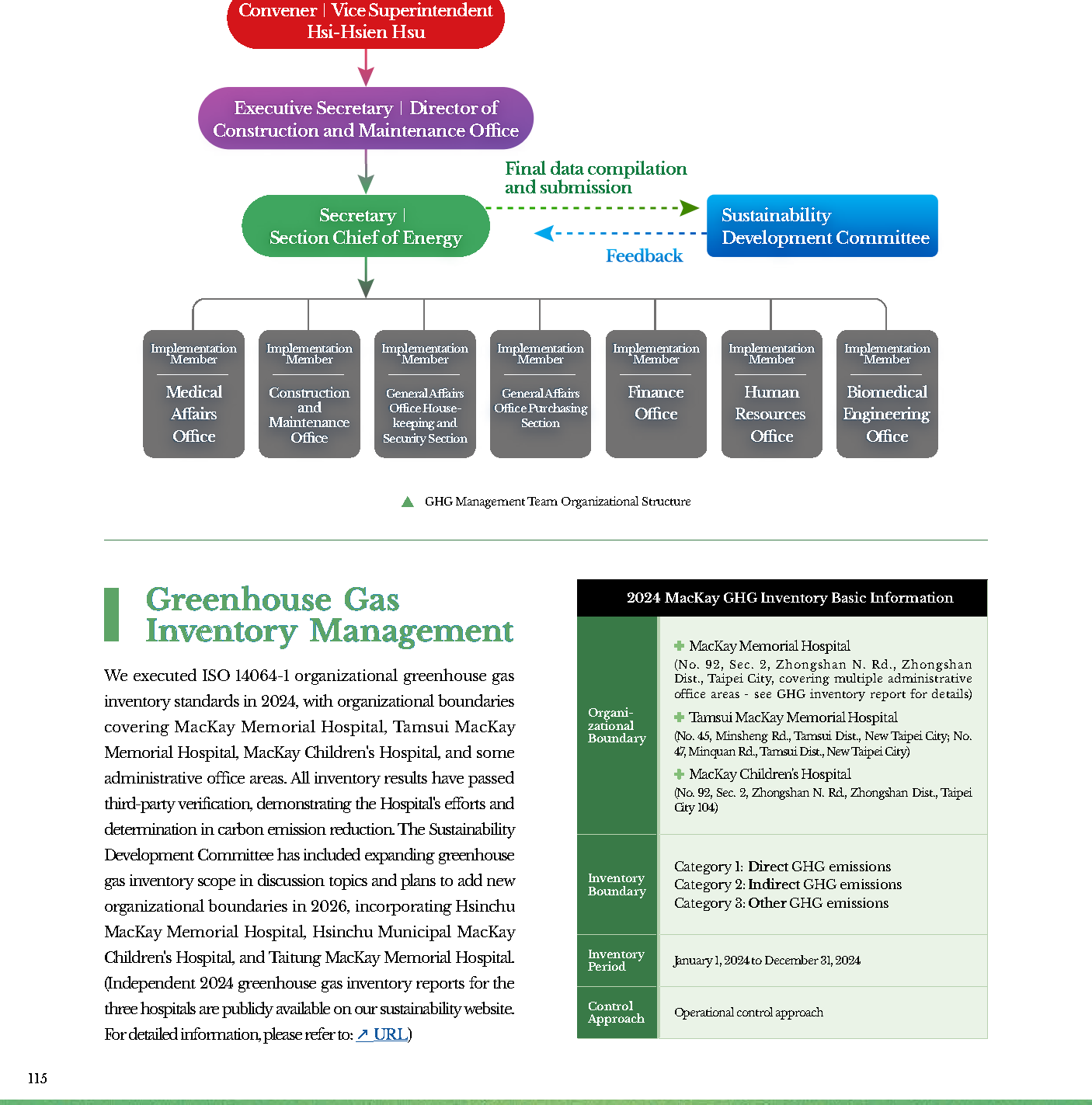
To ensure effective operation of our greenhouse gas management system, the Hospital established a “GHG Inventory Working Group” to execute the greenhouse gas management system. The inventory team is led by the Director of Engineering Office as Executive Secretary, with working groups composed of relevant departments responsible for conducting greenhouse gas inventories, data collection, emission calculations, documentation, and report preparation.
4.2.4 Water Resource Management
Water Resource Usage Management and Risk Prevention
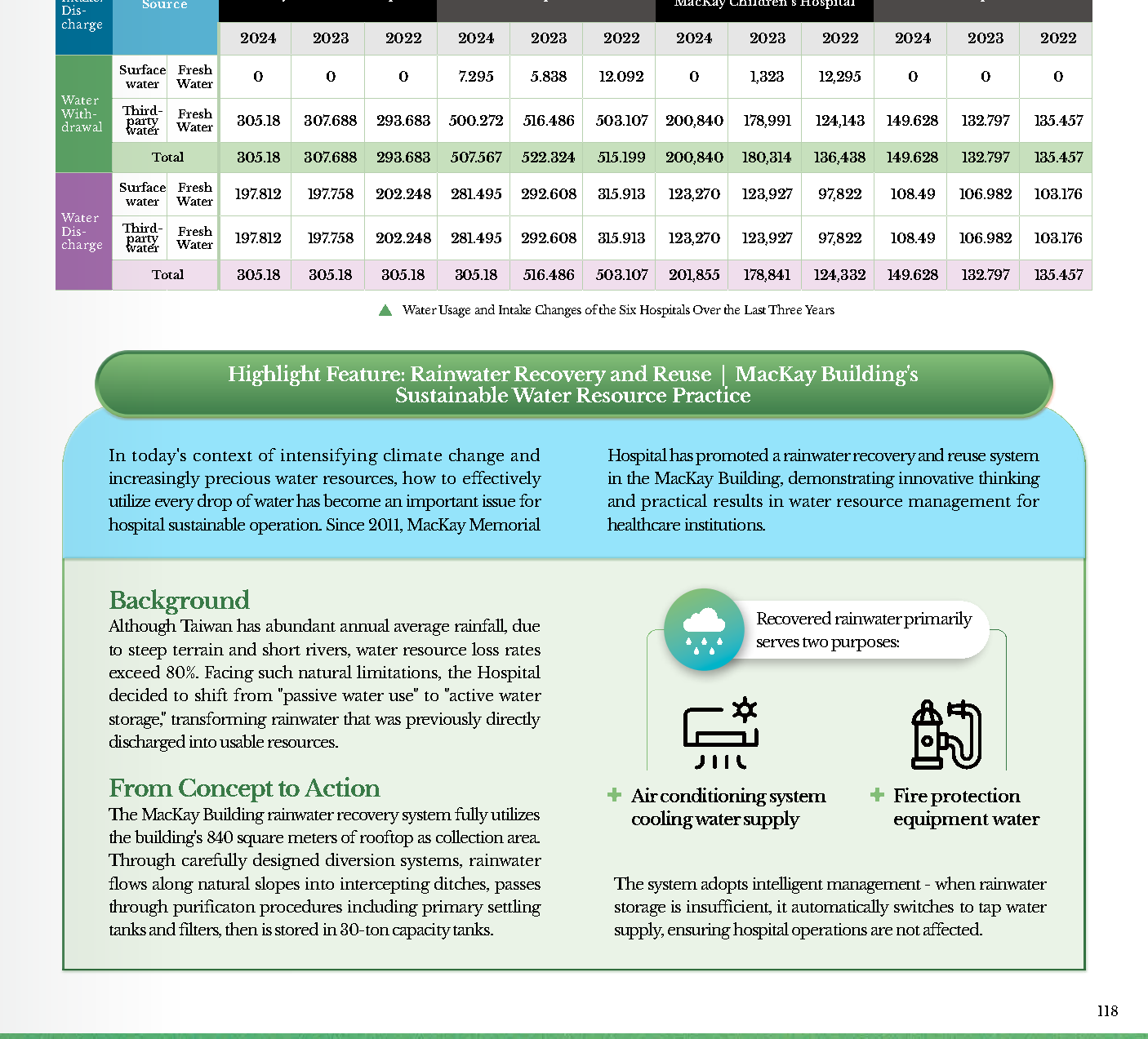
Taiwan's water resources are unevenly distributed and easily affected by rainfall frequency, coupled with unstable rainfall conditions due to climate change in recent years affecting water supply stability. Hospital operations require stable water supply for steady operation. To increase resilience against extreme climate and disasters, prevent and mitigate water resource risks, and strengthen adaptive resilience to avoid operational impacts from water shortages, our six hospitals each manage water resources independently.
The Engineering Department formulates “Water Outage Response Plans” targeting potential risks such as water supply interruptions with comprehensive response strategies, aiming to extend water supply time and ensure continuous medical services.
Water Usage Statistical Analysis by Campus
The Hospital's 2024 water usage primarily comes from third-party freshwater, with water management covering the entire process monitoring of water intake, usage, and discharge.
Waste Management
4.3.1 Waste Classification and Management System
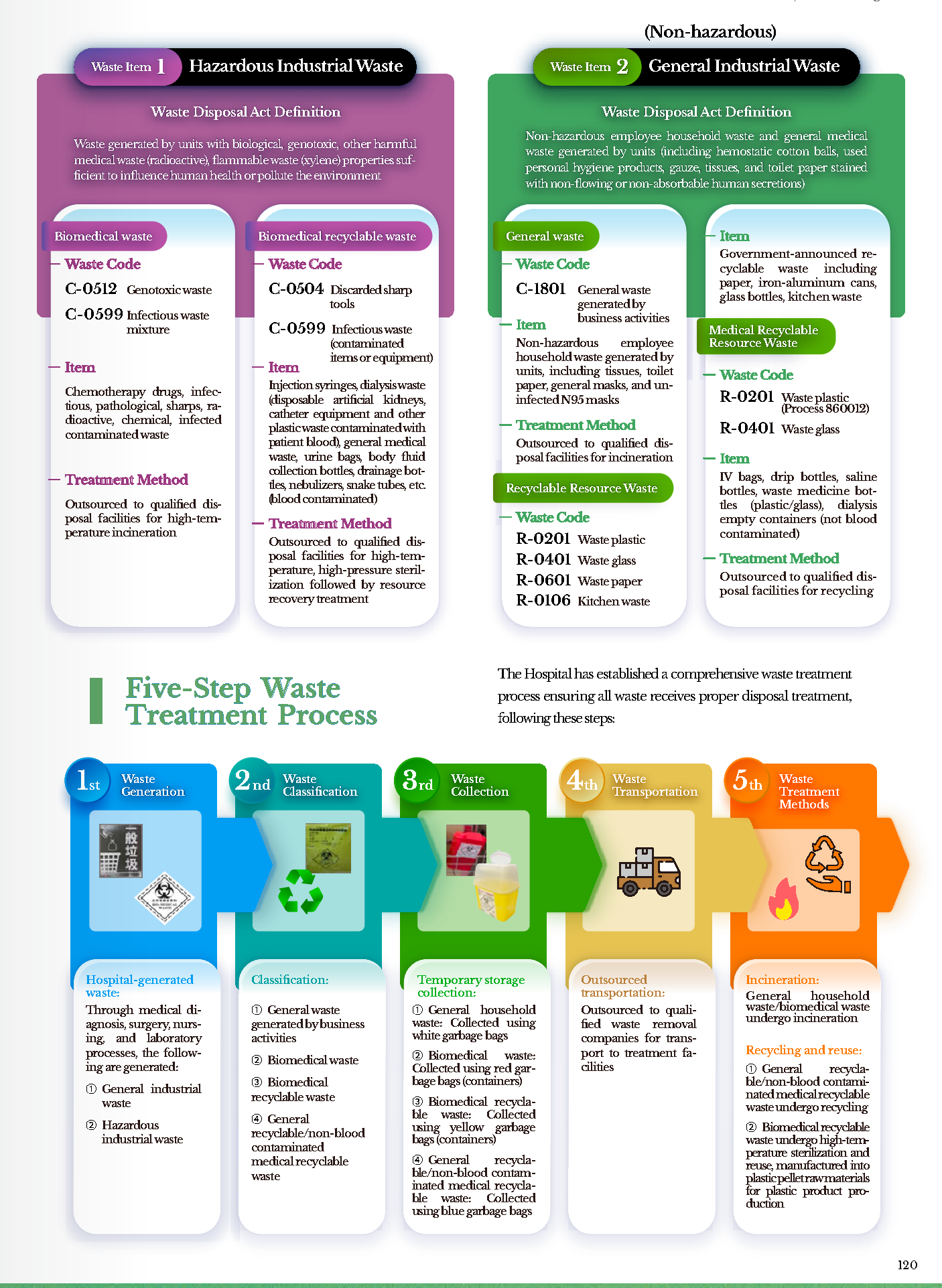
All six MacKay hospitals have legally established comprehensive waste management systems, strictly following the “Waste Disposal Act” and related regulations, with individual hospital “Medical Waste Management Regulations” for systematic classification, collection, and treatment of various wastes generated by hospitals.
Hospital waste is primarily classified into two major categories: “Hazardous Industrial Waste” and “General Industrial Waste.” Hazardous industrial waste refers to waste generated by enterprises that is toxic or dangerous, with concentrations or quantities sufficient to affect human health or pollute the environment. General industrial waste refers to waste generated by enterprises other than hazardous industrial waste, including general household garbage, recyclable resource waste, and medical recyclable resource waste.